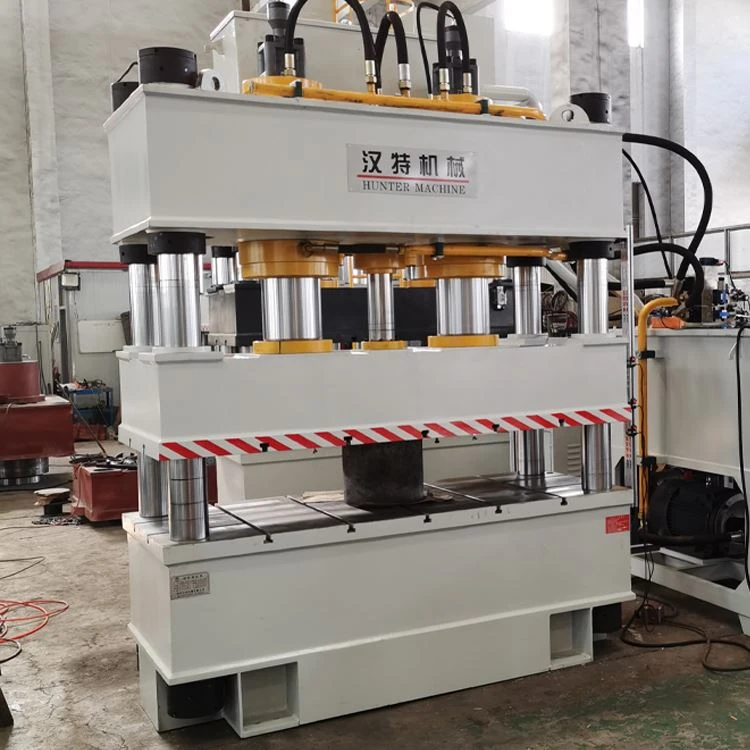
Hüdraulilise pressi põhiparameetrid
Põhiparameetriteks on hüdraulilise pressi põhilised tehnilised andmed, mis määratakse vastavalt hüdraulilise pressi tehnoloogilisele kasutusotstarbele ja konstruktsioonitüübile. See peegeldab hüdraulilise pressi töövõimet ja omadusi ning määrab põhimõtteliselt ka hüdraulilise pressi kontuuri suuruse ja üldise brutokaalu. Põhiparameetrid valib kasutaja. Peamine ostmise alus. Millised on siis hüdraulilise pressi põhiparameetrid? Kuidas mõista ja valida hüdraulilise pressi parameetreid? Täna selgitan teie jaoks välja tavalise kolme-tala nelja-sambaga hüdraulilise pressi põhiparameetrid.
1. Nimijõud (KN)
The nominal force is generally the main parameter of the hydraulic press, which reflects the working capacity of the hydraulic press. The nominal force is the maximum working pressure that the hydraulic press can nominally issue, and is numerically equal to the product of the maximum liquid pressure and the total area of the working plunger (piston radius) R²πpressure gauge value (system pressure)
Note: 1MPa≈100N
Take 60T calculation as an example: cylinder diameter φ180mm system pressure 25MPa (for high pressure)
90903.1425÷10000 (unit conversion)
2. Maksimaalne kõrgus (avamiskõrgus)
The maximum clearance distance refers to the distance from the upper surface of the table to the lower surface of the movable beam when the movable beam stops at the upper limit position. The maximum clearance distance reflects the size of the working space of the hydraulic press in the height direction. It should be determined by process factors such as the height of the mold and the corresponding backing plate, the size of the working stroke, and the size of the space required for placing the blank and taking out the workpiece. The maximum clearance has a great influence on the overall height of the hydraulic press, the length of the column, the stability of the hydraulic press body and the height of the installation workshop. The maximum clearance distance of the single-arm hydraulic press is the distance from the lower plane of the indenter to the upper surface of the table.
3. Maksimaalne löök
The maximum stroke refers to the distance from the lower plane of the column guide sleeve of the movable beam to the upper plane of the column travel limit sleeve when the movable beam is at the upper limit position, that is, the maximum distance that the movable beam can move. The maximum stroke should be determined according to the required maximum working stroke during the workpiece forming process.
4. Tabeli suurus (pikkuse laius)
The workbench is generally the place where the mold is placed. The size of the worktable refers to the effective size that can be used on the worktable, and the size of the worktable depends on the plane size of the mold and the arrangement of the process.
5. Kõri sügavus (ühe-kolonni hüdrauliline press)
Refers to the distance from the center of the single-column hydraulic press head to the inner surface of the frame.
6. Tagastusjõud
The return force refers to the weight of the movable part, the force required for the return process (such as the draft force, the lifting force of the chopping knife), etc.
7. Liigutatava tala liikumiskiirus (liuguri kiirus): seda saab jagada töökäigu kiiruseks, tühikäigulöök (vedeliku täitmise käik) ja tagasilöögi kiirus.
The idle travel and return travel can generally be higher to improve productivity, but too fast will cause shock and vibration when stopping or reversing.
Kiirust on kolme tüüpi:
⑴Constant speed (eternal speed): rising speed, falling speed (using electro-hydraulic reversing valve)
⑵Differential: ①Fast down, slow back ②Slow down, fast back, idle descending, pressing, and returning (with cartridge valve) ③Up and down equal velocity
(3) Kiire (vedeliku täitmise süsteem): see on ka tahtlikult varustatud kiirust suurendava-silindriga, selle asemel, et toetuda oma kaalule;
8. Nominaalne väljaviskejõud ja väljaviskekäik
The function of the ejector cylinder is to eject or stretch, and the power and stroke safety of the ejector are determined by the process requirements;
9. Y27 ühe -toimega lehte venitav hüdrauliline press peab teadma ka hüdropadja jõudu ja hüdraulilise padja käigu parameetreid.
10. Y28 topelt-toimega lehtede joonistamise hüdrauliline press peab teadma ka tõmbejõu parameetreid, tooriku hoidiku jõudu, joonistusliuguri käiku, tooriku hoidiku käiku, tooriku hoidiku avanemiskõrgust. joonistusliugur ja tooriku hoidiku avanemiskõrgus.
11. Kas ühe-kolonni hüdrauliline press on padruni tüüpi või ülemise liuguri (pressimisplaadi tüüpi) konstruktsioon, kas töölauda on vaja korrigeerida jne.
12. Toimingute jada (tegevusprotsess) Klient esitab pressimisprotsessi jada ja protsessi nõuded (protsessinõuded).